
Spotsylvania County Deed Types
The Clerk records more than sale deeds. Deeds of trust, releases, corrections, contracts of sale, modifications, assignments, plats, easements, and judgments all appear in the deed index. Each instrument plays its own role. A title question often needs those related filings beside the deed itself. Never assume an entry is a transfer of ownership.
| Deed Type | What It Does | Common Use |
|---|---|---|
| General warranty deed | Conveys the described interest with broad warranty language. | Review the parties and full legal description. |
| Special warranty deed | Limits the grantor's warranty to a stated period or source. | Read the warranty clause in the recorded instrument. |
| Quitclaim deed | Conveys whatever interest the grantor holds, if any. | Compare it with prior and later deeds. |
| Deed of gift | Records a conveyance without an ordinary sale framing. | Check the stated parties and consideration fields. |
| Executor or trustee deed | Shows a transfer by a fiduciary capacity. | Pair it with the probate or trust context. |
A deed of trust secures a debt. It does not mean the borrower sold the property. Later certificates of satisfaction, partial releases, assignments, or substitutions of trustee can change the status of that security record. An easement works the same way. It can limit use of the land without changing the fee owner, so the deed and its related instruments must be read together.
Spotsylvania's 1996 Index Boundary
Spotsylvania County states that its land-record system covers 1722 to the present. That span hides a split. For records before January 1996, the Clerk directs researchers to the older grantee-grantor index. Pick the right era first. Coverage is not the same as a single modern search form or a guarantee that images open from home. The county publishes no exact image cutover year.
Virginia indexing law names the parties and instrument categories. Deeds, corrected deeds, deeds of trust, contracts of sale, modifications, releases, and substitutions of trustees all fit those rules. A cover sheet may carry consideration or actual value, parcel or tax-map references, exemption details, and a return address. Those categories frame a deed search. The county's Records and Recordation page gives the 1722 span and the pre-1996 direction. It is the official word on both.
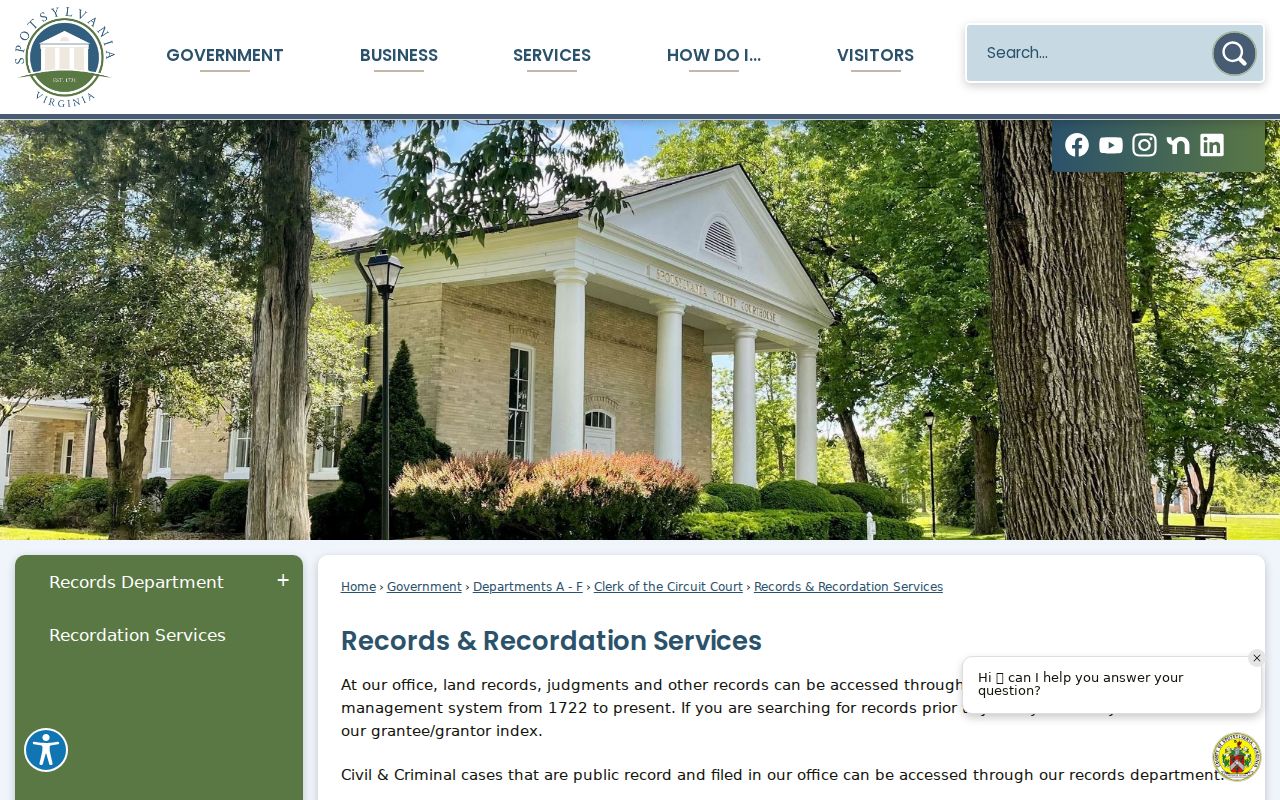
Choose the right index era before tracing a recorded transaction.
Remote Spotsylvania Deed Images
Virginia Secure Remote Access, also called SRA or COVERS, is a separate layer for land records. A clerk may enable free index-only viewing. Document images are different. They require authorization, an agreement, and paid subscriber access. Spotsylvania's page calls online land-record access paid-subscription only. The SRA page explains statewide access terms, though it does not spell out each county's form fields, result caps, or image cutover.
Keep discovery and review separate. A name or instrument entry helps you locate a filing, but the image is the record text you must read for parties, legal description, recording date, consideration, return address, parcel reference, and restrictions. If an image stays closed to your account, ask the Clerk about counter access or an authorized subscription. The Virginia SRA access page describes both tiers. Index access and image access are two gates.
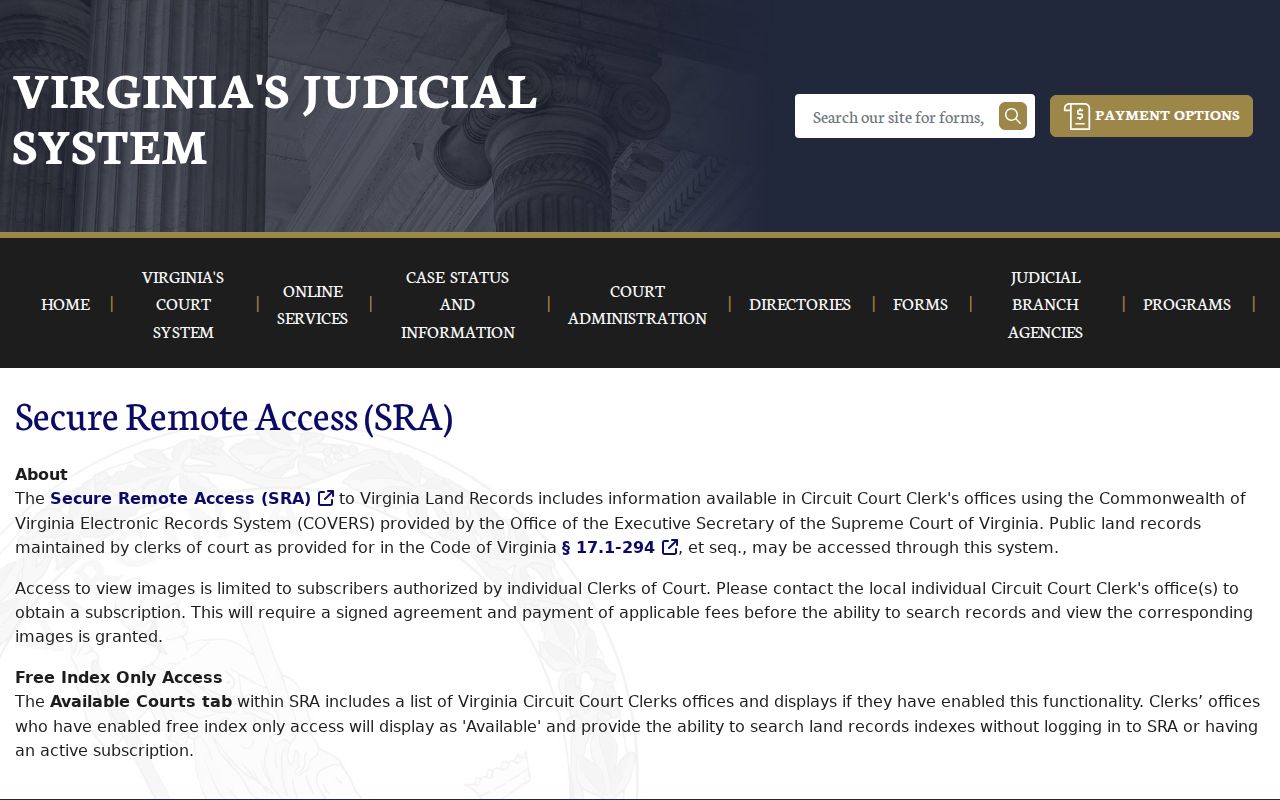
Read the SRA notice first to see what the access gate covers, then confirm Spotsylvania subscription terms and remote deed-image options with the Clerk.
The Spotsylvania Grantor-Grantee Index
The grantor conveys an interest. The grantee receives it. Virginia's index rules sort deed entries and many related instruments by those party roles. Search the name in the right role first. Then inspect the instrument to confirm the entry matches the land in question. Similar names, family transfers, estates, trusts, and company names can produce a false match if the parcel or address is not checked.
- Use the current assessment parcel key to identify the land and the latest deed date if known.
- Search the current grantee and grantor names with a narrow date range and the instrument type that fits.
- Compare the index entry with the deed's parcel reference, legal description, recording date, and book/page or document placement.
- For pre-January 1996 material, switch to the older grantor/grantee index; for earlier books, ask about the Library of Virginia finding aid.
- Grantor
- The party that transfers or grants the stated interest.
- Grantee
- The party that receives the stated interest.
- Chain of title
- The linked recorded conveyances for a parcel over time.
- Book/page or instrument
- A Clerk reference used to locate a recorded document; preserve the form shown.
Historic Spotsylvania Deed Books
The Library of Virginia inventory starts with Deed Book A, covering 1722 to 1729, then B, C, and D through the mid-eighteenth century. Books A through K span 1722 to 1785. Later groups AA through RR cover 1825 to 1865. Additional volumes run into the late nineteenth century, and the inventory also lists land-tax books from 1782 onward plus processioners' returns from 1796 to 1831. Some early indexes are unpaged.
Not every listed volume is a digital image. The finding aid marks some reels for interlibrary loan. A listing is no proof of online access. Ask the Clerk or the library about the item and its access route. Older deeds may describe land by farm, watercourse, road, or metes and bounds rather than a situs address or tax-map string. The Library of Virginia Spotsylvania inventory lists the reel and book coverage.
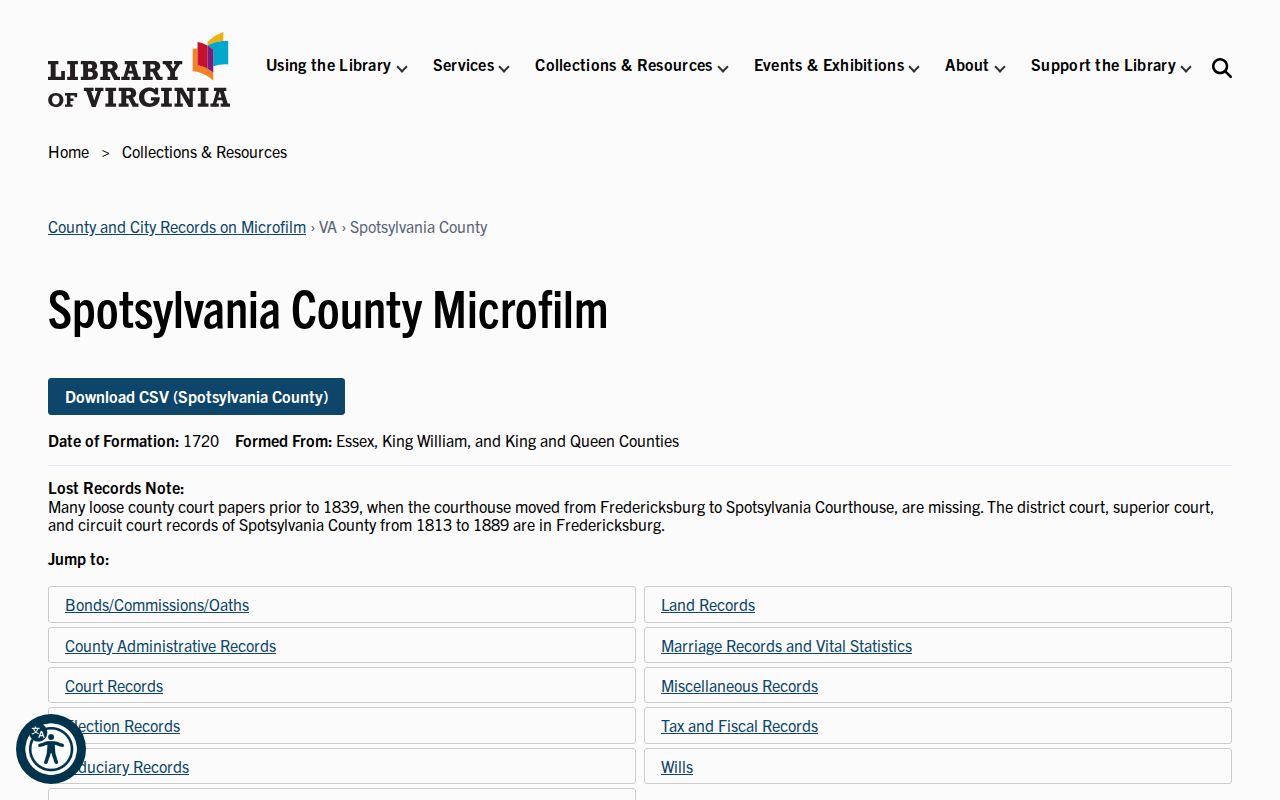
The holdings are a route, not a digitization promise.
Spotsylvania Clerk Counter Access
The Clerk's office sits at 9107 Judicial Center Lane in Spotsylvania. Weekday hours run 8:00 a.m. to 4:00 p.m. Same-day land recording stops at a 3:00 p.m. cutoff. For records-room questions, call 540-507-7609 or 540-507-7621; subscription questions go to 540-507-7612 and 540-507-7615. Match your call to the task. A records-room line may not handle remote login help.
When you arrive, bring the party names and an approximate date. Also bring the parcel or tax-map string and any book/page or instrument reference. Say up front whether you want inspection, an ordinary copy, or a certified copy. The county's inspected pages post no full per-page fee schedule. So confirm the charge before travel. Ask too whether the volume you need is stored on site. If a deed is held but not displayed online, a focused Virginia FOIA request can work.
The Circuit Court Clerk page lists office duties and the public records contact route.
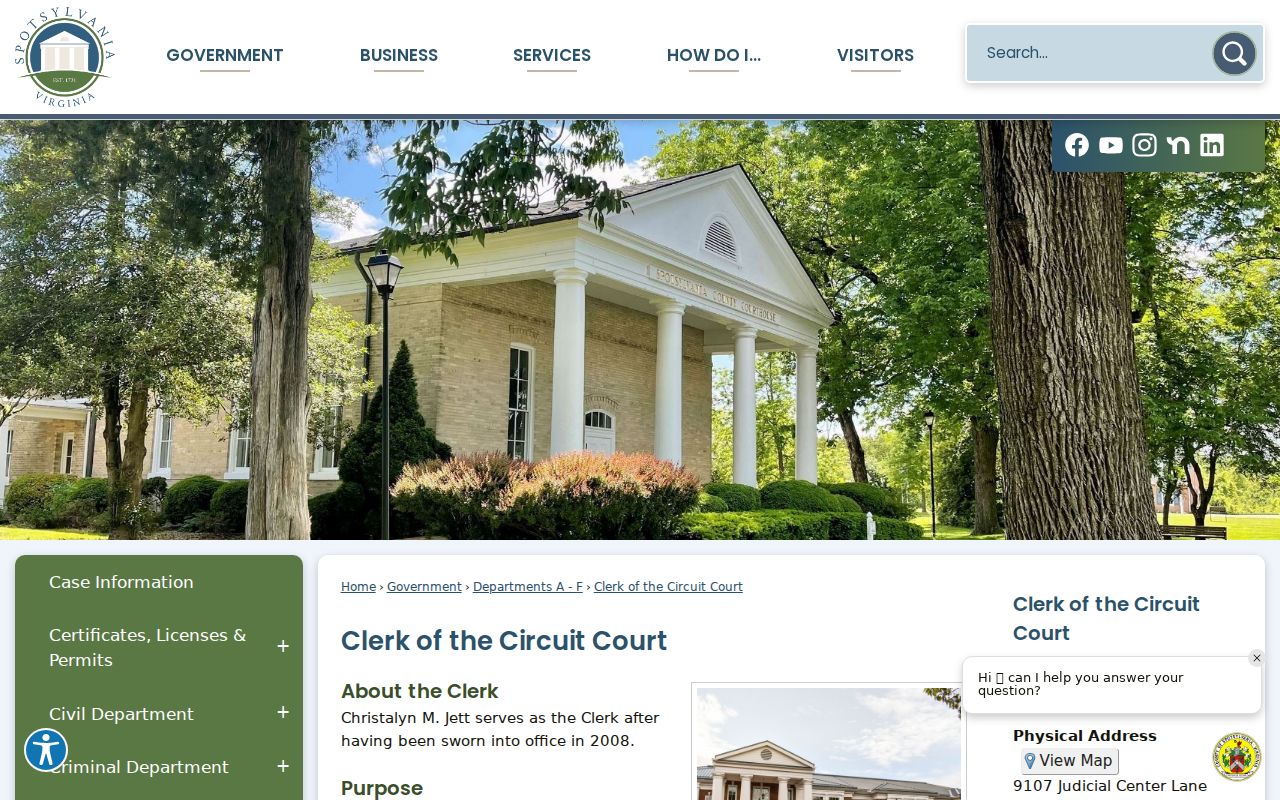
The Clerk's two roles are easy to confuse. The county page separates broad public duties from the specific deed search route, and the Virginia Courts page for Spotsylvania Circuit Court adds local court contact and filing information.
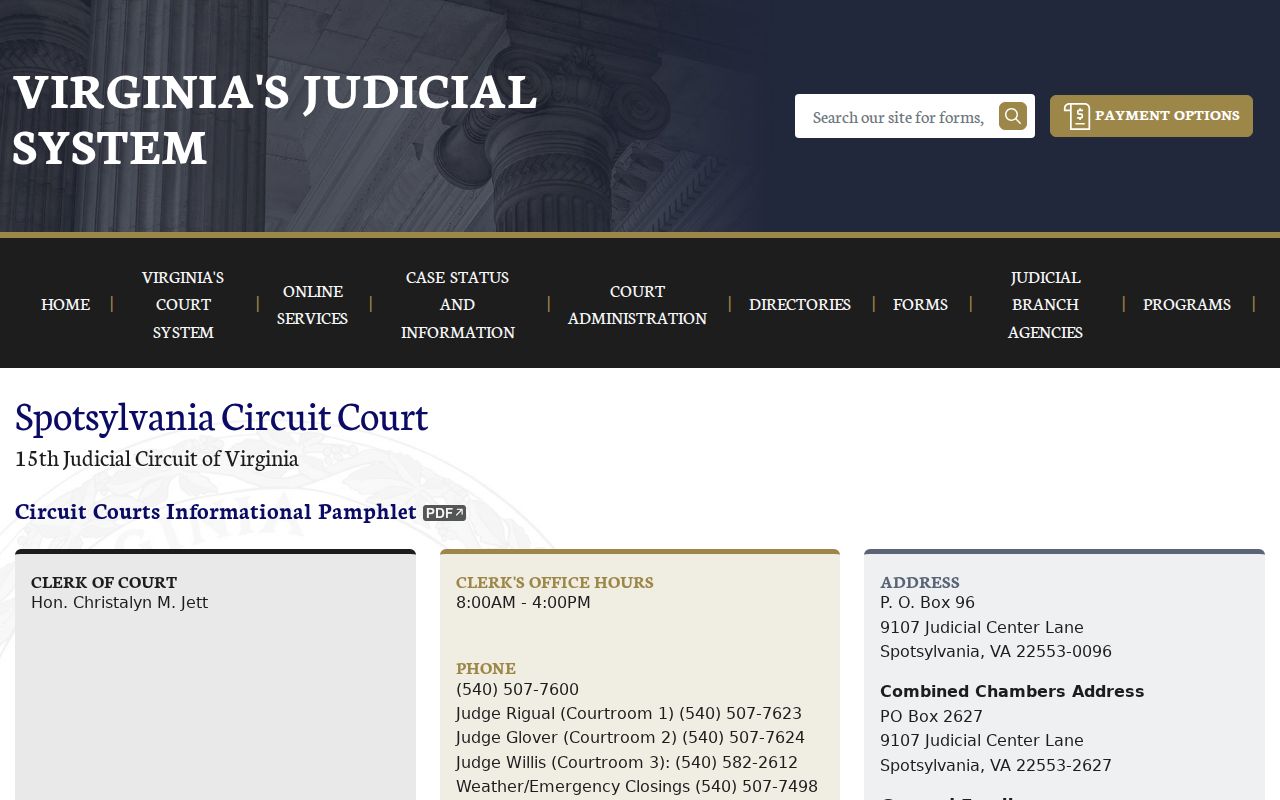
Deed questions often trace back to a case file. When one depends on a court order, probate matter, or related filing, check the Spotsylvania court's current contact details before you act.
Get a Spotsylvania Deed Copy
Start by finding the deed in the Clerk's index. Ask the records room to help locate it. Give the grantor and grantee, the approximate date, the legal description or tax-map key, and the book/page or document number when you have one. Ask whether an image can be sent, whether a counter visit is required, and what the current fee is. No single universal copy price appears on the county's public page.
Virginia FOIA, Va. Code §§2.2-3700 through 2.2-3714, governs requests to public custodians, subject to exemptions and actual-cost charges. Under §2.2-3704, describe the record with reasonable specificity. A certified copy may carry a different charge than inspection or a plain image. Beware unofficial deed-copy mailers. Never send personal payment information to one.
Recorded, not guaranteed. The Spotsylvania County deed index helps locate an instrument; it is not a title opinion, and it does not prove that every interest has been found or released. Use a title professional for a legal title conclusion.
When a Spotsylvania Book Is Missing
Some Spotsylvania deed records are simply gone. The Library of Virginia reports loose court papers missing from before the 1839 courthouse move, a lost Deed Book 10 covering 1835 to 1838, and a destroyed Will Book C from 1759 to 1761. District, superior, and circuit court records from 1813 to 1889 sit in Fredericksburg instead. These gaps explain a broken chain. A missing entry is not proof.
Later deeds often recite prior instruments and can rebuild the chain. Other records fill the gaps. Land-tax books, wills, probate, court orders, plats, and nearby parcel records all supply leads. Note which documents you actually inspected. Keep facts taken only from a later recital separate from those you saw firsthand. Library of Virginia finding aids help identify sources, and the Central Rappahannock Regional Library's Virginiana Room is another lead, though never a substitute for the recorded instrument itself.
Spotsylvania Deed Alert Check
Spotsylvania runs a deed-fraud alert system. It sends notices about activity involving a property. An alert is a signal, not a verdict that a transfer is false. Check the alert against the Clerk's own record. Compare party names, the date, the parcel key, the legal description, and the instrument type.
The county's deed-alert announcement describes the notice service. If a filing looks unfamiliar, call the Clerk through a number on the official county site and ask how to inspect the underlying instrument.
Keep the alert, index entry, and deed image separate when you review the event.