
Trace Former Spotsylvania Owners
Start with the newest deed. Build a dated chain, not a simple list of names. For every transfer, record the grantor, the grantee, the instrument type, the recording date, and the book or page reference, so each Spotsylvania County deed connects to the one before it. An older owner of record becomes the next search clue only after the preceding instrument's legal description matches the same parcel.
| Transfer date | Grantor → Grantee | Deed type | Book / page or document reference |
|---|---|---|---|
| Most recent deed date | Copy the grantor and grantee exactly as recorded | Copy the instrument type shown on the deed | Enter book/page or document number |
| Prior acquisition date | Use the prior deed's grantee and grantor | Record the earlier conveyance type | Enter the earlier book/page or number |
| Next transfer date back | Repeat with the previous owner in the chain | Distinguish deed from trust, release, or easement | Keep the reference that links to the source |
| Earlier deed-book date | Use the older index before January 1996 | Record the book's own instrument label | Copy the archive or Clerk volume reference |
Coverage is not the same as image access. The county sends pre-1996 research to an older index. The Library of Virginia catalog lists microfilm reels, and some circulate through interlibrary loan, so a gap in one Spotsylvania County property records system may close in another. Match the route to the date you need instead of assuming the full chain sits on one screen.
Spotsylvania's Pre-1996 Index
Spotsylvania's land-record system reaches back to 1722. Yet the Clerk sends anything before January 1996 to the grantee and grantor index. A modern parcel number may fail there. Names carry you across the index boundary. Party roles matter just as much. Pull the grantor and grantee from the newest deed, then compare the earlier instrument's land description against the same parcel before stepping back further. Virginia SRA/COVERS adds another layer. A Clerk may grant free index-only access, while images require local subscription authorization plus payment. The county itself describes its online land-record access as a paid subscription. That paywall is separate from the coverage claim. The original deed books still sit in a records room or archive. The county's recordation page gives the cutoff instruction and the full record span.
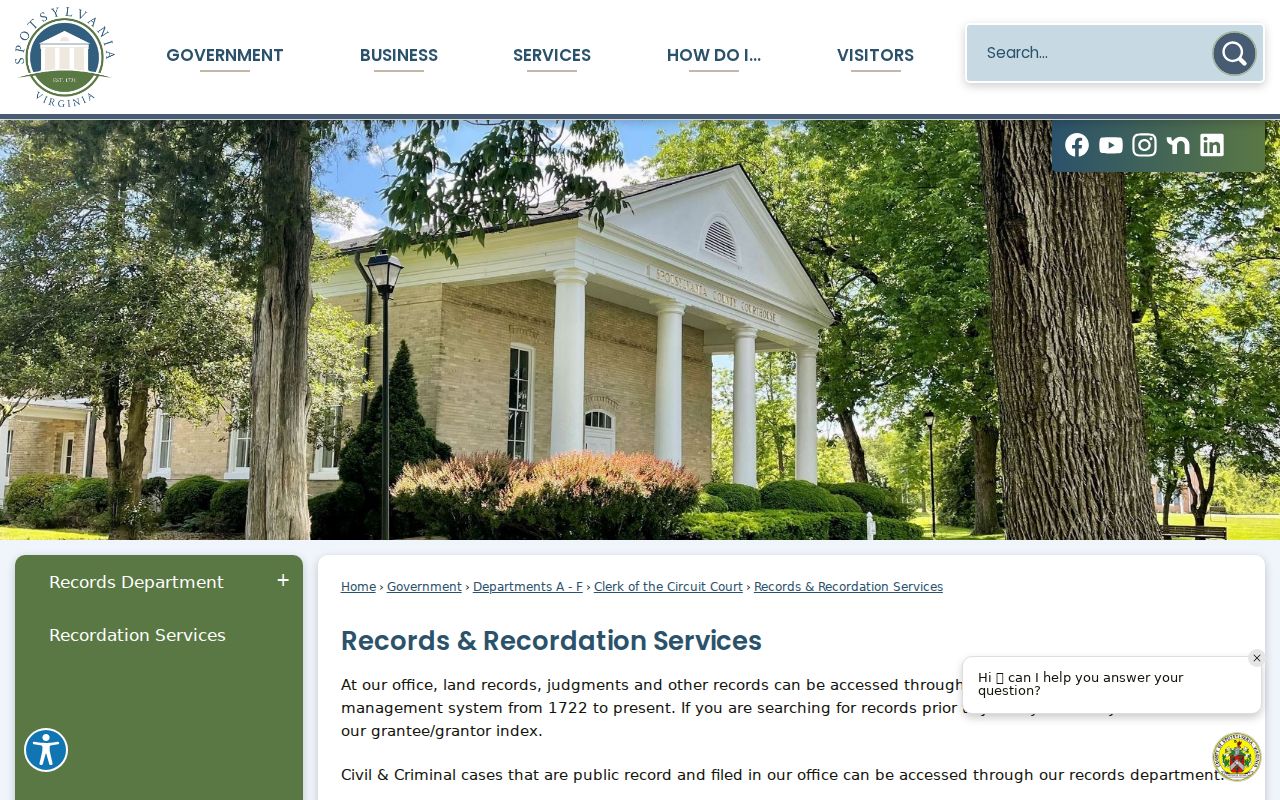
Let the stated cutoff decide which index you search.
Historic Spotsylvania Deed Books
Spotsylvania County's earliest deed records begin with Deed Book A, covering 1722 through 1729. The Library of Virginia's catalog shows later books A through K running from 1722 to 1785. Then come groups AA through RR from 1825 to 1865. More volumes from the late nineteenth century follow those. A word of caution applies here. Some indexes have no page numbers. A surname plus a rough year range often works better than a modern document number. The finding aid describes holdings. It does not promise that every page has been digitized. Old deed language rarely matches today's records. A colonial deed may cite a farm name, a road, a creek, a boundary call, or a neighboring landowner. Street addresses simply do not appear. A tract was sometimes later subdivided. Trace both the earlier description and the new lot and block together. Never assume a modern parcel number appears in an old Spotsylvania deed. For a full picture, the Library of Virginia finding aid spells out which deed books and indexes exist.
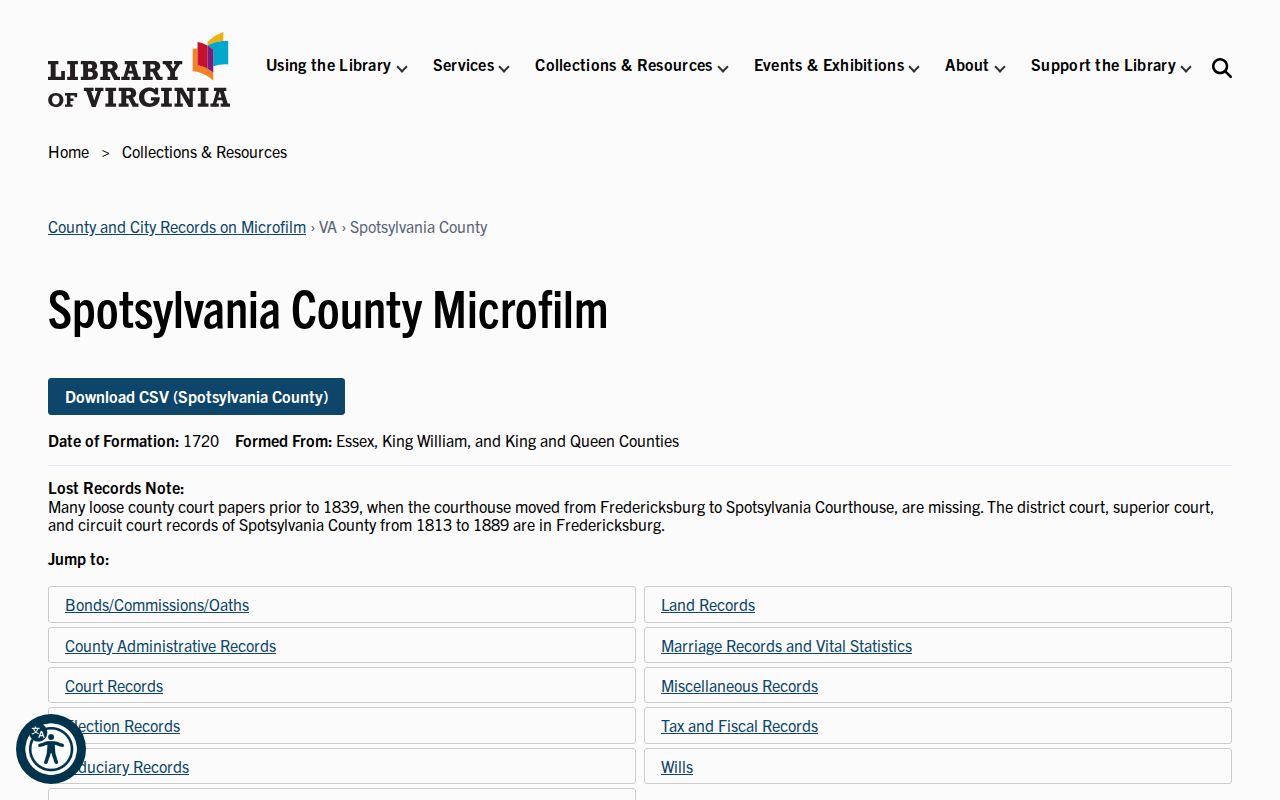
Take the volume and index details from the catalog and build a search plan with the Clerk's office or a library. A second route exists too. The Library of Virginia's county records-availability page lists which Spotsylvania microfilm and record collections it holds.
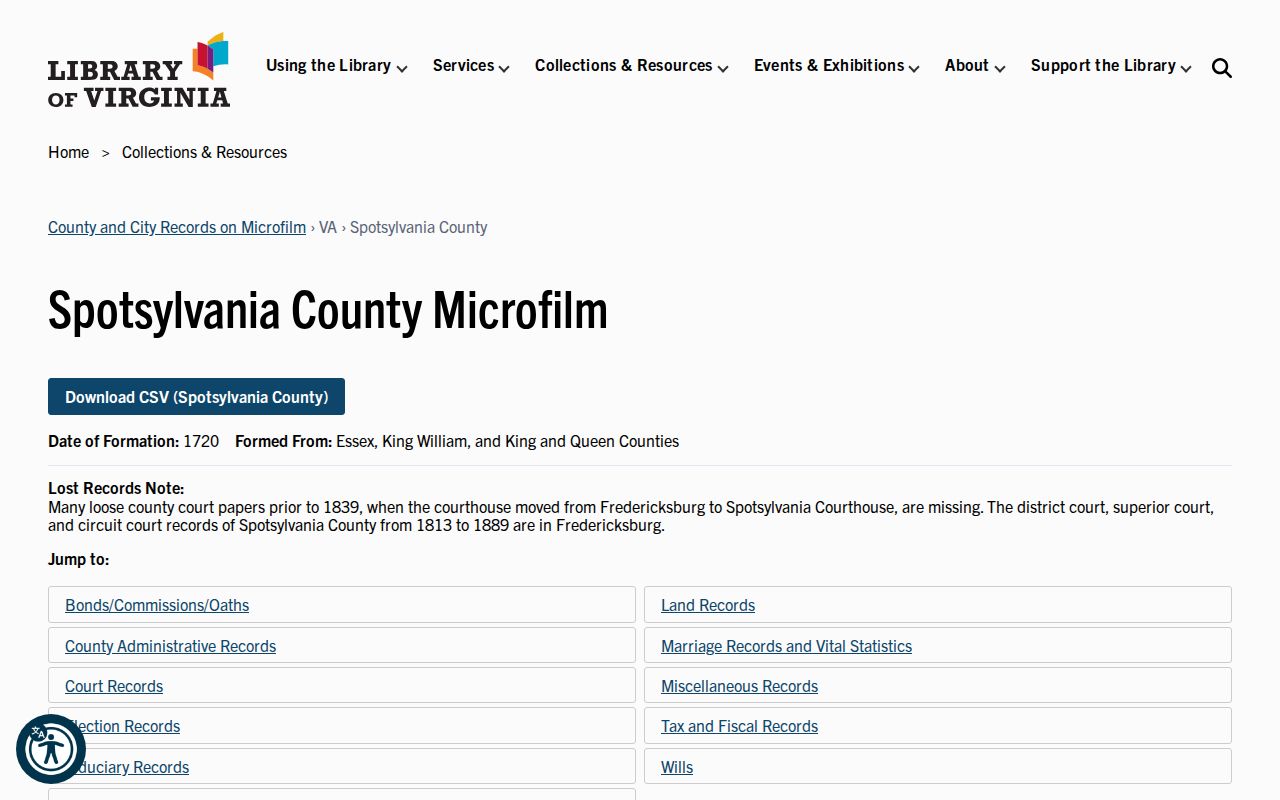
Scan the inventory for a reel or collection first. Then confirm how to reach it, whether locally, online, or by interlibrary loan.
Read the Spotsylvania Chain Backward
Reading a deed chain works best in reverse. Start with a grantee you know, then step back each time that buyer becomes the next grantor. Write down the instrument before jumping to another name. Not every recorded document signals a new owner of record, though. A deed of trust, a corrective deed, or an easement can sit beside a conveyance in the deed records. These instruments do not transfer title in Spotsylvania County.
- Begin with the latest deed for the parcel and record its grantee, grantor, date, description, and reference.
- Search the grantee's prior acquisition and compare the land calls to the current tract.
- Carry the earlier grantor back as the next grantee to locate that party's acquisition.
- When the chain crosses a death, trust, company, or subdivision, branch to the related record and then return to deeds.
- Grantor / grantee
- Party conveying an interest / party receiving it.
- Chain of title
- The linked conveyances used to follow a parcel backward.
- Legal description
- The land text used to match a deed to a tract, even as an address changes.
- Reverse search
- Following a prior grantee as the next grantor or acquisition party.
Land-Tax Books and House History
Spotsylvania land-tax books survive for several spans. The runs cover 1782 to 1806, 1807 to 1834, 1834 to 1850, and 1865 to 1870. They sit in the Library of Virginia's inventories. Processioners' returns from 1796 to 1831 add another layer. They trace boundary walks that fixed historic property lines. Together these records tie an owner of record to land in an era before parcel numbers or street addresses existed.
A house-history project works best when you separate leads from proof. Directories, yearbooks, oral histories, maps, and newspapers can all point toward a family. They can also suggest an old road name. Treat them as clues. The records that establish the chain are deeds, plats, tax books, wills, and court orders. A remembered farm name may steer your index search. It proves nothing on its own.
The Central Rappahannock Regional Library's local-history and genealogy resources open the door to regional collections. Those collections are rich in older names and place clues.

Let the library collection shape a research lead. Then test that name or place against a recorded deed, plat, or tax book. The Central Rappahannock Regional Library's Virtual Virginiana collection links digitized local history materials for exactly that kind of digging.
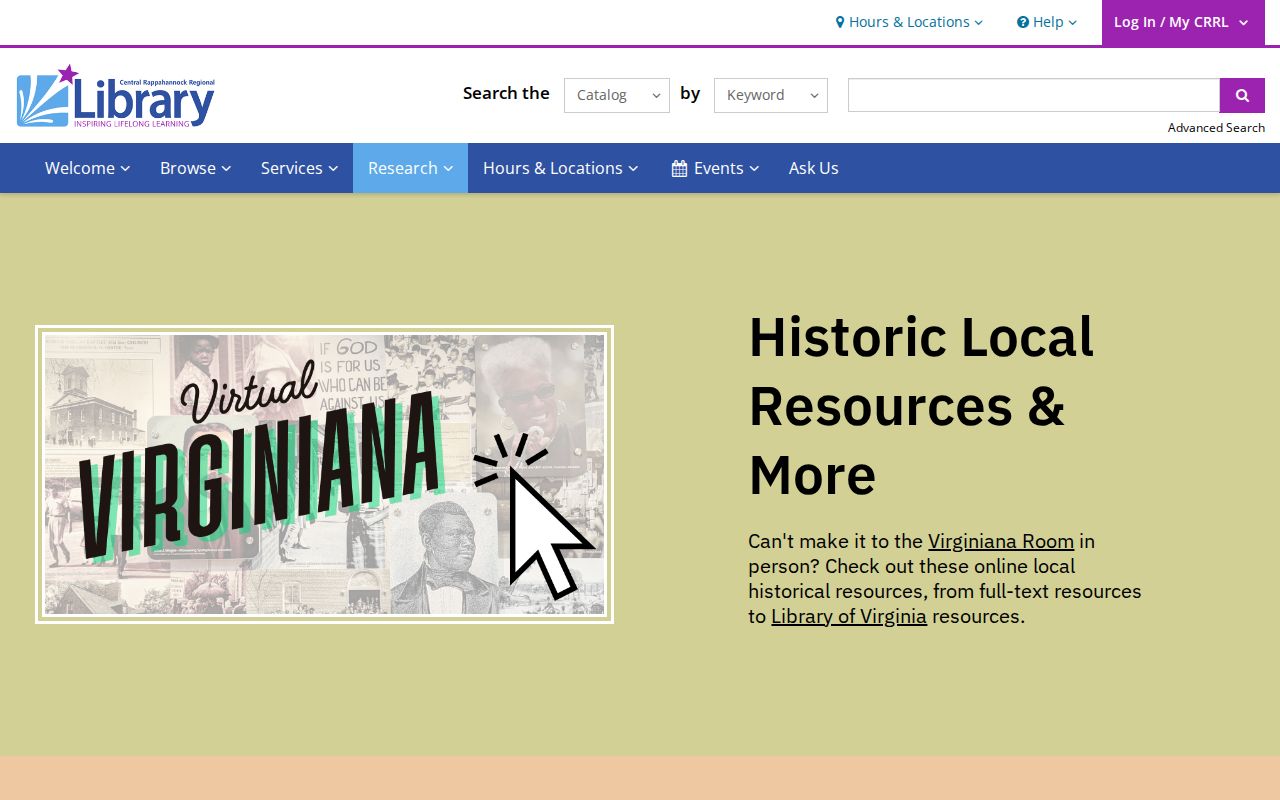
Use the library material to surface names and dates, then confirm them against a land record.
Estate Transfers in the Chain
A death in the ownership chain often explains an odd transfer. The deed may pass through an executor, an administrator, a trustee, or a deed of distribution. Spotsylvania County's Circuit Court Clerk keeps the land records and the probate files side by side. Probate shows who had authority to sell. The deed itself remains the title-facing proof.
Search the capacity name and the person behind it. Match the parcel description and dates across both record sets. A death certificate explains timing. It does not move title. Read an estate or trust name in a grantee line exactly as written, and resist turning it into an individual owner without support.
Missing Spotsylvania Records
Some early Spotsylvania County records simply do not survive. Many loose county court papers predate the 1839 courthouse move. The Library of Virginia notes that these are missing. Deed Book 10, covering 1835 to 1838, is lost. Will Book C, from 1759 to 1761, was destroyed. District, superior, and circuit court records from 1813 to 1889 sit in Fredericksburg instead. These gaps matter when an early chain skips a link.
A missing book does not erase the transfer. Later deeds often recite the prior instrument. Tax books, probate, chancery, plats, and neighboring deeds can bridge the route. Track which links rest on original documents and which rely on later recitals. That distinction matters when you explain the chain to another researcher.
Spotsylvania Ownership Record Depth
Spotsylvania County land records reach back to 1722. The Library of Virginia traces the county's 1720 formation from Essex, King William, and King and Queen Counties. It then places Deed Book A two years later. Few Virginia counties offer that kind of depth. Still, not every deed is digitized. Not every chain runs clean back to an original patent.
For deep research, work from the newest deed to the older index. Then move to the named book or microfilm. The Library's inventory covers early deeds, land taxes, wills, marriage registers, and court records. Some reels travel only by interlibrary loan. Ask a reference librarian or the Clerk about the specific volume. A catalog entry is not always a viewable scan.
Lawful use. Use former-owner research in Spotsylvania County for house history, title work, and property diligence. Do not use records to track, harass, intimidate, or harm a living person.